Myriad Meta Modulators
Meta Modulators
Meta modulators are algorithmic systems that can add some extra movement and complexity to the oscillators.
Pushing Y alternates between oscillator and meta-modulator screens.
Controls
Modulation Targets
The outputs of the meta-modulations can be mapped to pitch, ϵ, or both. Push Z to cycle through these options.
Speed and Depth
Rotating X and Z controls speed and depth of modulation.
Boids
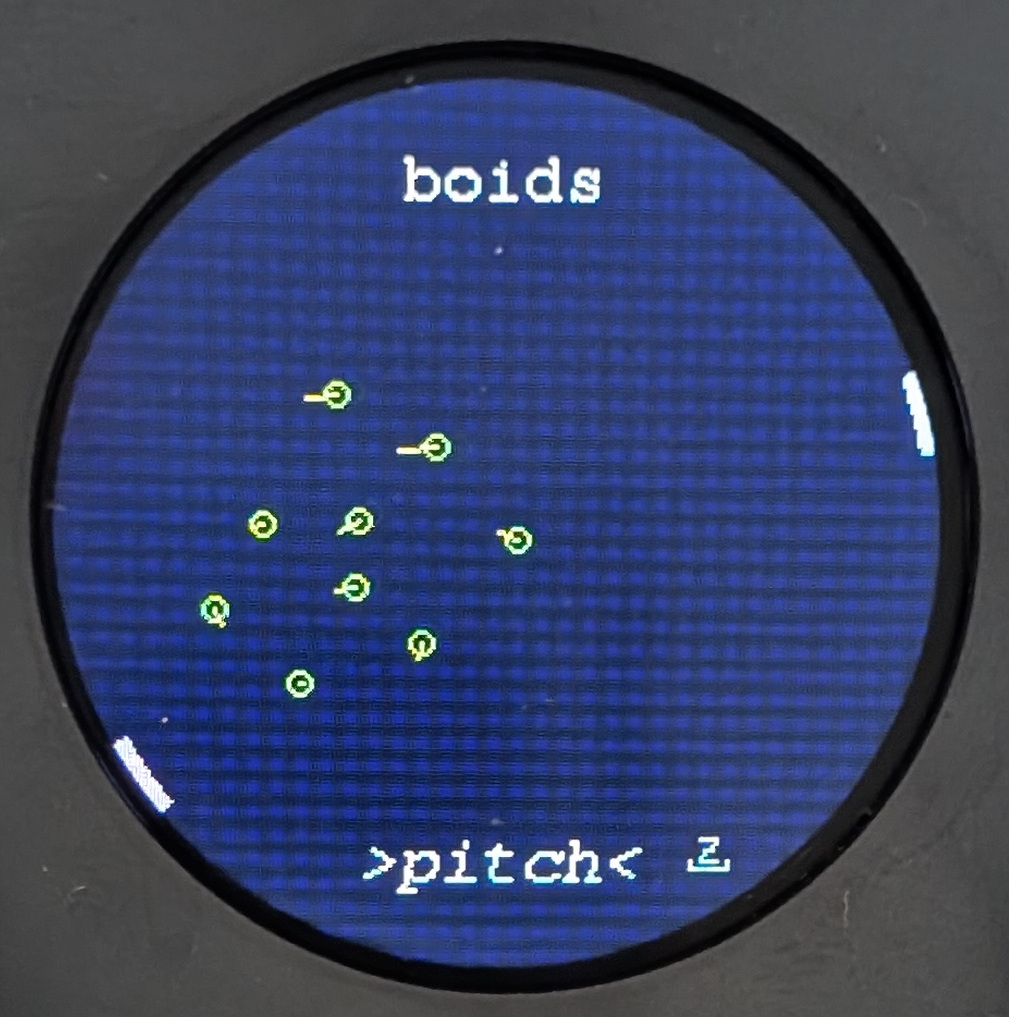
Boids (Reynolds, 1986) is an artifical life algorithm, simulating the flocking of birds. The boids try to follow three rules:
- Coherence: steer towards other boids
- Separation: avoid flying into other boids
- Alignment: match the speed and direction of other boids
From these simple rules, complex behaviour emerges. The velocity of each of the nine boids modulates the oscillators.
Lorenz Attractor
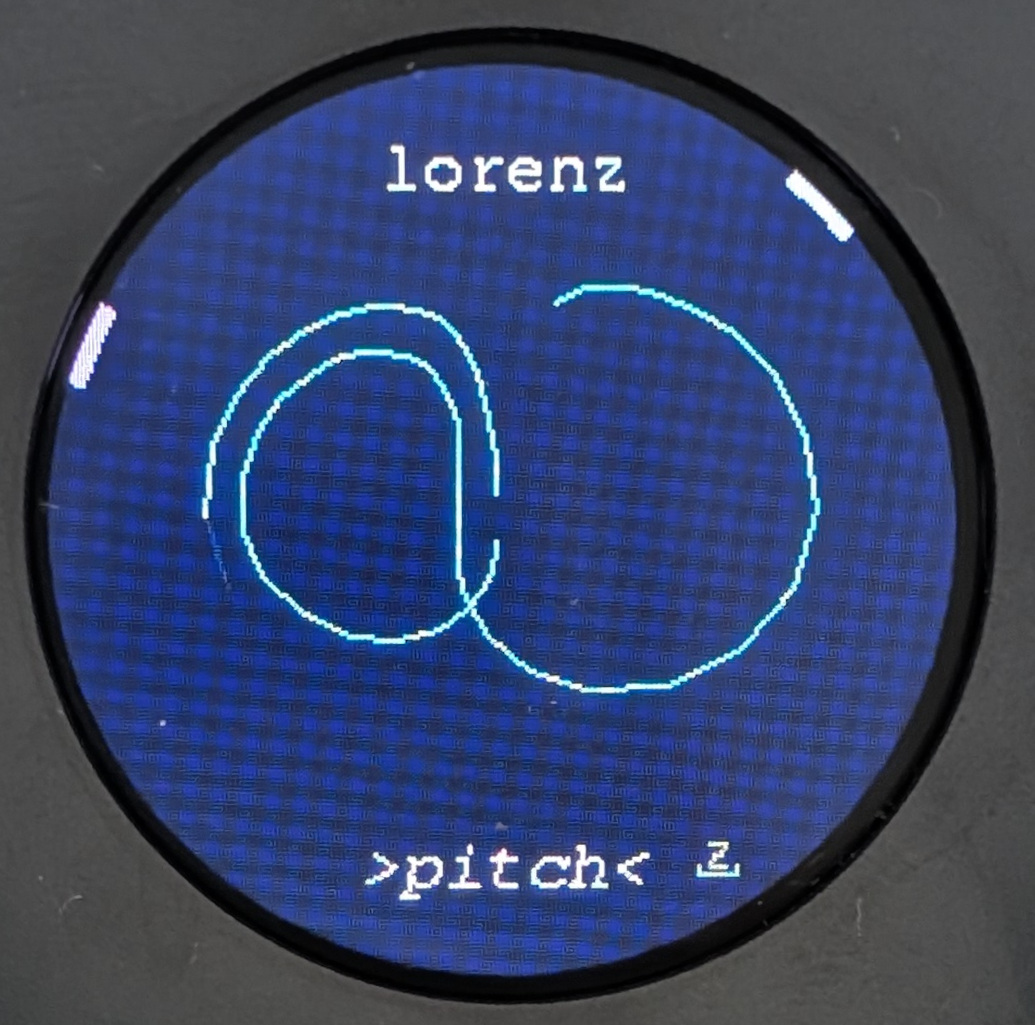
The is a dynamical system with chaotic behaviours, created by meterologist Edward Lorenz in 1963. The system is started from initial conditions that result in a butterfly shape. The system moves in three dimensions (although we view it in 2D); the position, velocity and acceleration of the system create nine measurements which are used as modulation.
Rossler Attractor
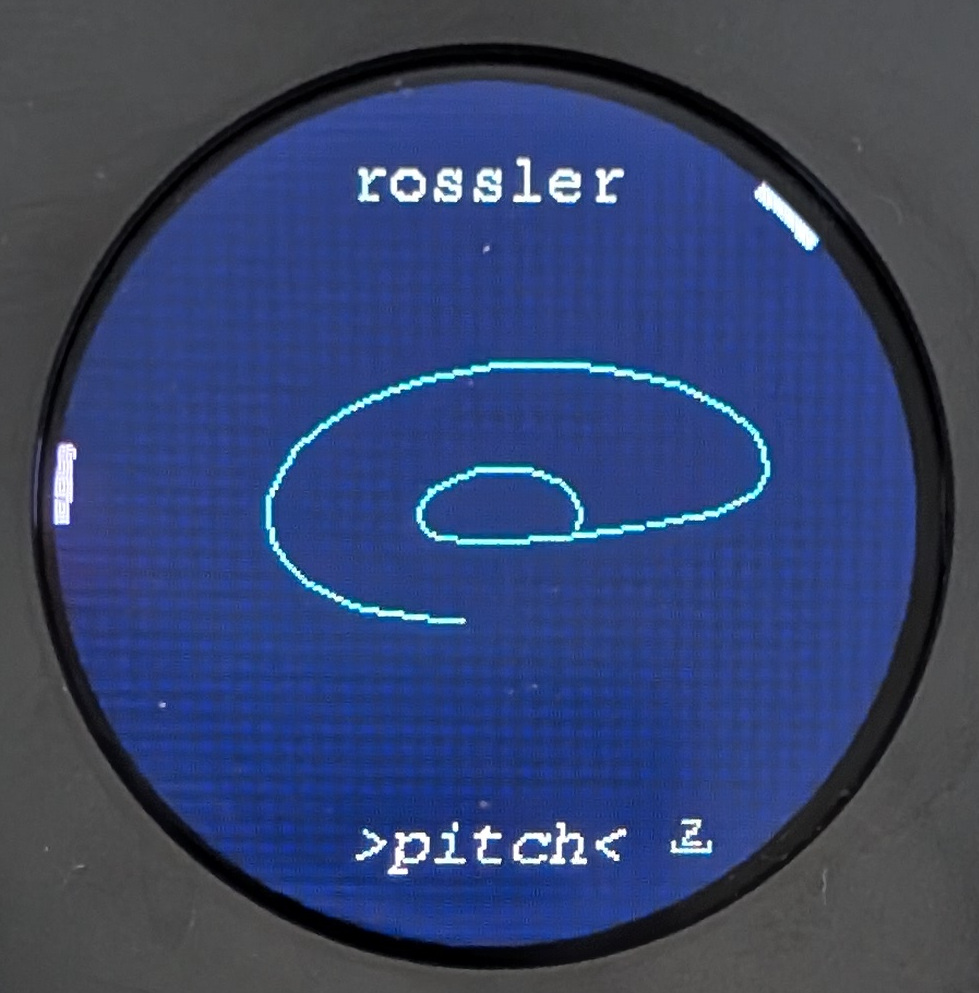
Another 3D system with chaotic dynamics, published by biochemist Otto Rössler in the 1970s.
Sines
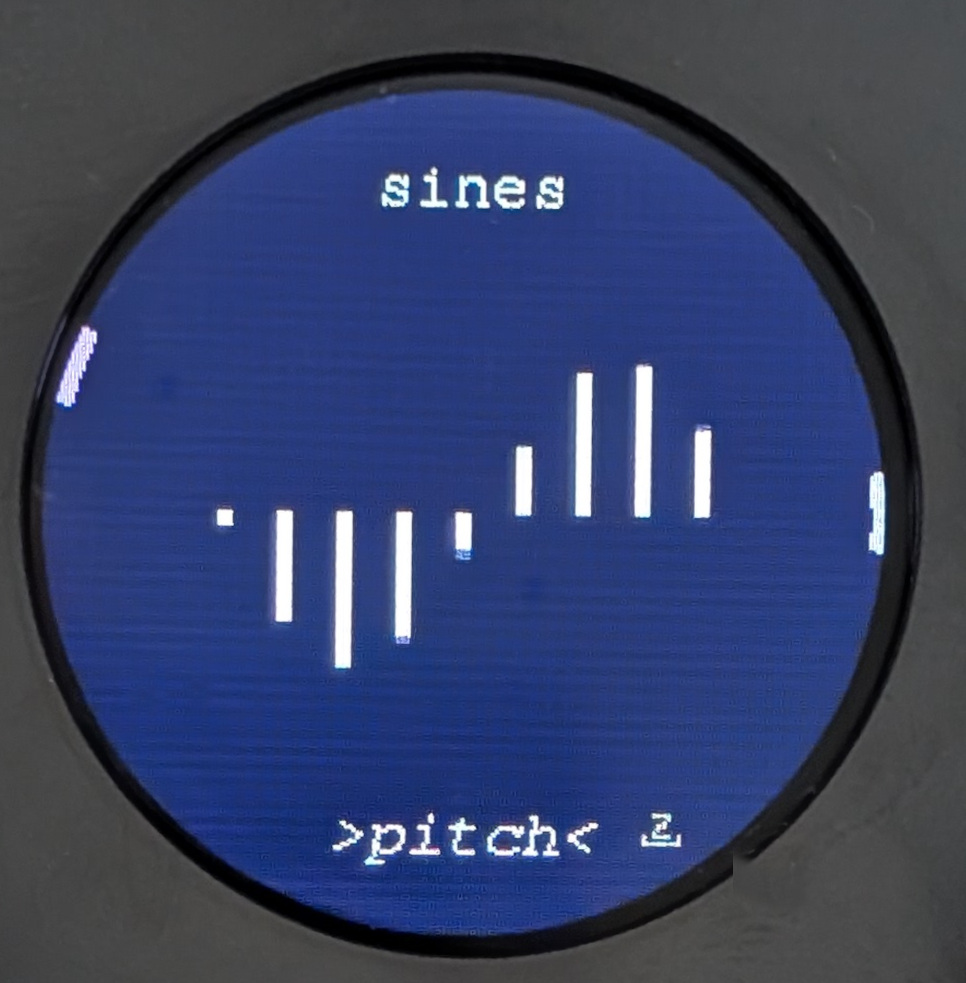
A set of nine sinewave oscillators, all running at the same speed, with a 40 degree phase difference from each other.
Speedy Sines
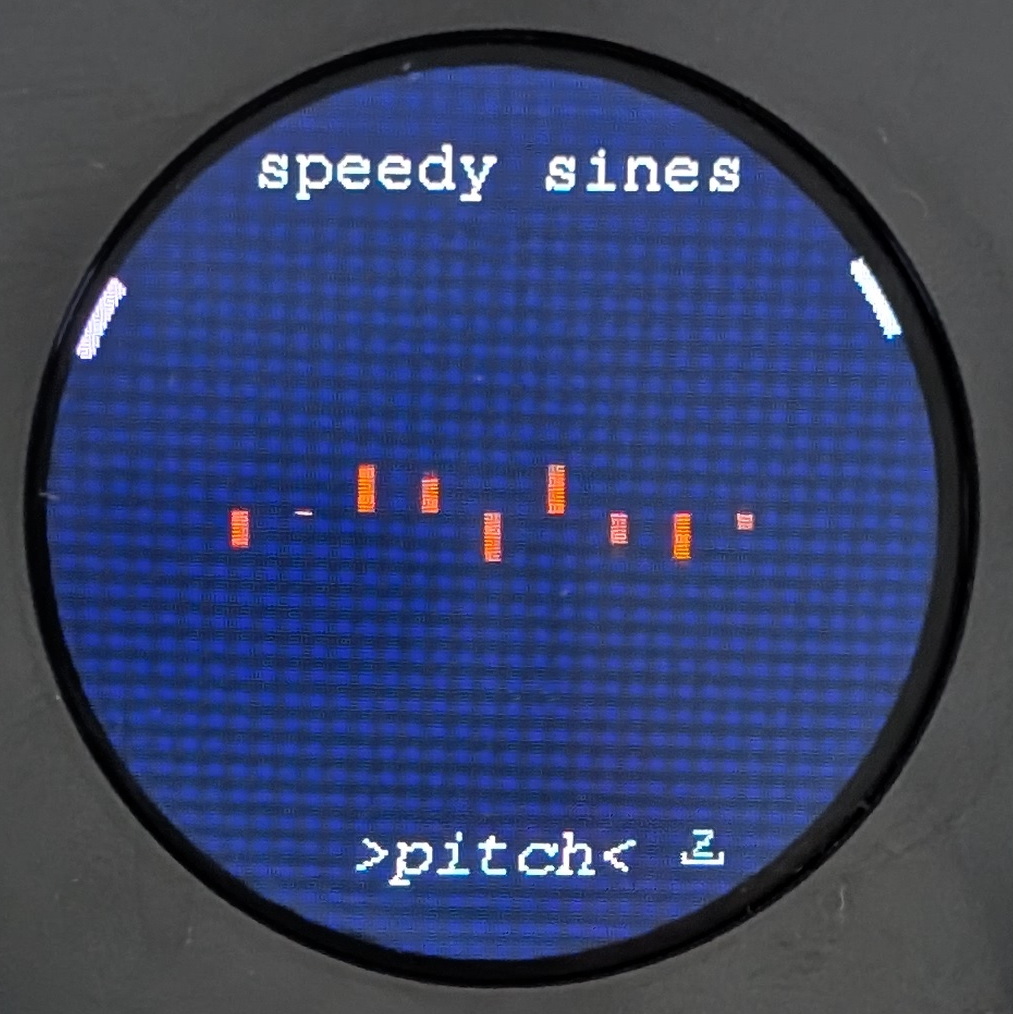
Nine sinewave oscillators, with 40 degree phase differences, and also varying in speed.
Neural Network
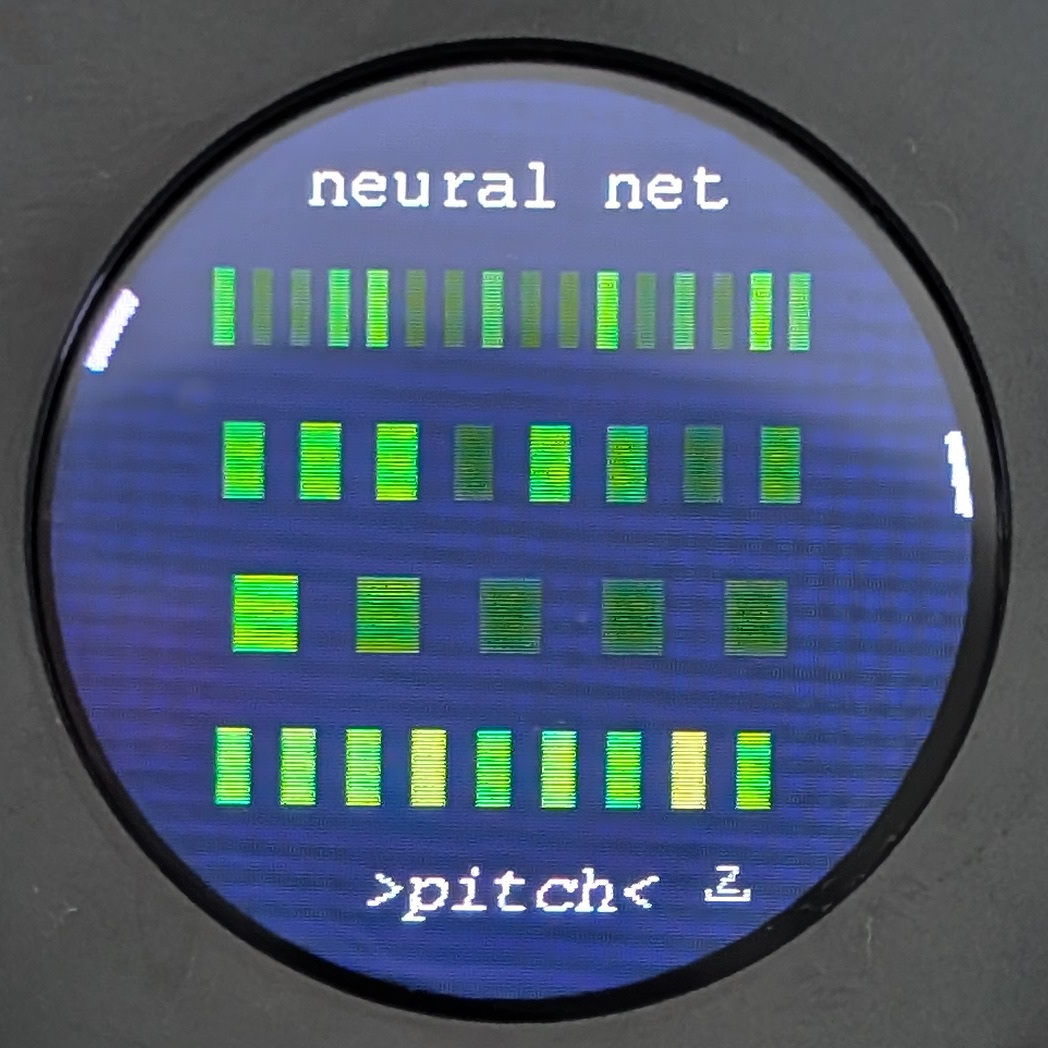
The neural network is an source of complexity. It has five inputs: readings from frequency, spread, ϵ and interval controls, and a phasor which changes speed and depth with the meta-modulation screen controls. The nine outputs of the neural network are used for modulation. The network (a multilayer perceptron) will have a nonlinear response to its inputs, creating some strange and unpredictable modulation.
The neural network comes from an Emute Lab research project Musically Embodied Machine Learning.
Drunk Walkers
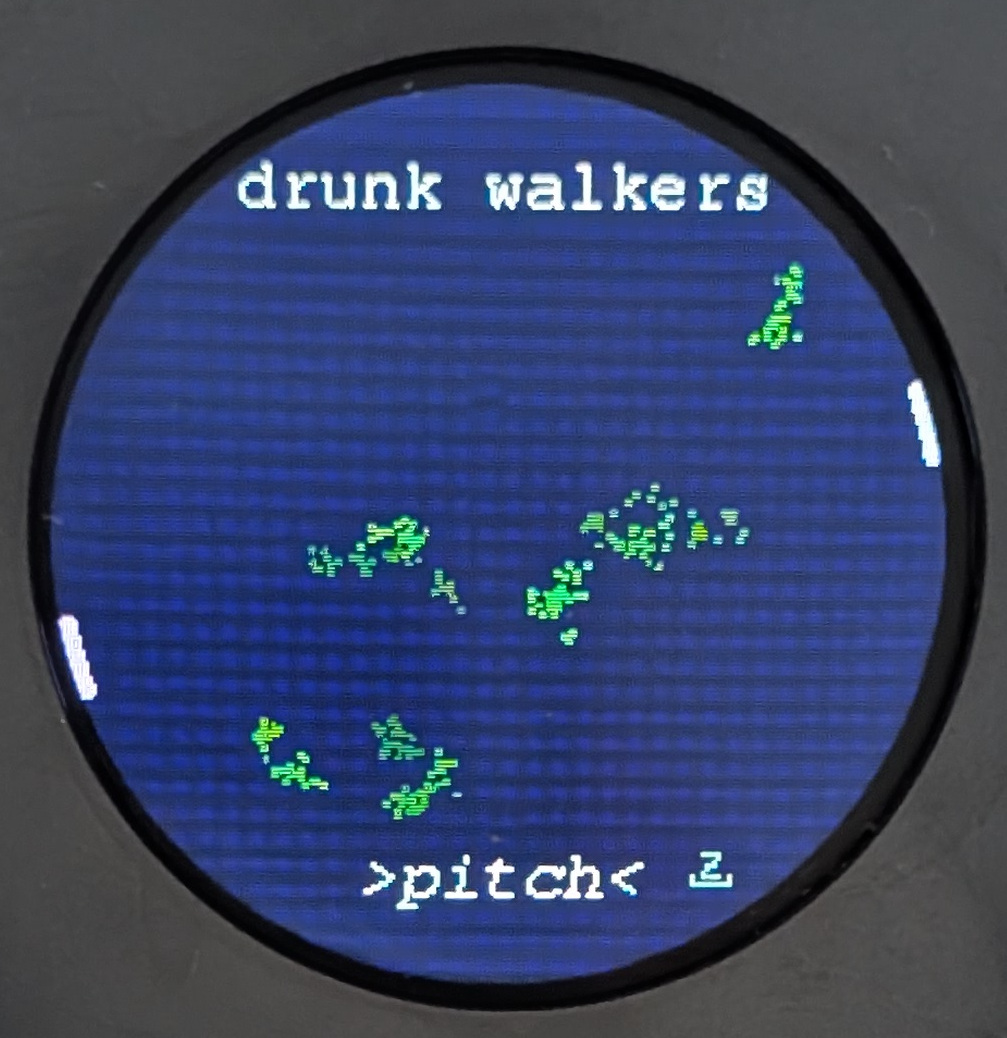
These walkers have had a few too many. So much that they can’t even walk in a straight line, just in the direction of a linearly distributed random vector each step. While they stagger obliviously across the screen, their distance from the centre determines the modulation of your oscillators. They will never sober up.